When (and When Not) to Run a 2.5″ Hose on a Shop-Vac-Style Dust Extractor
One of the most common questions we hear is some version of:
“Can I hook up my 2.5″ dust collector hose to my Fein / Festool / Nilfisk extractor?”
The short answer is yes — physically.
The longer answer is yes, but you need to understand what you’re trading.
This post explains why people do it, why it sometimes works, why it often disappoints, and how to use HoseJoy size-down adapters in a way that won’t leave you wondering where your suction went.
The Core Problem: CFM vs Velocity
Dust collection performance always comes down to two forces:
- Airflow (CFM) — how much air you’re moving
- Velocity — how fast that air is moving at the tool
Shop-vac-style extractors (Fein, Festool, Nilfisk, etc.) are high static pressure, relatively low CFM machines. They’re designed to overcome restriction, not to move huge volumes of air through large ducting.
That’s why they ship with 32 mm–38 mm hoses, not 2.5″ dust collector hose.
A smaller hose:
- Increases air speed at the tool
- Improves fine dust capture
- Matches the extractor’s design intent
But it comes with a cost…
Why Long Runs of Small Hose Are a Problem
A small hose is restrictive. Very restrictive.
If you run 20–30 feet of 32 mm hose, most of your extractor’s energy is spent just dragging air through the hose walls. The result is lower CFM and mediocre pickup.
This is where people start looking at 2.5″ hose.
Why People Try 2.5″ Hose on a Fein (and Why It’s Not Crazy)
A larger hose dramatically reduces friction losses over distance. If you must go far — across a shop, between stations, or to a mobile tool — a larger diameter trunk line can help preserve airflow.
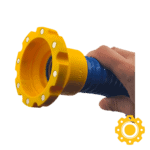
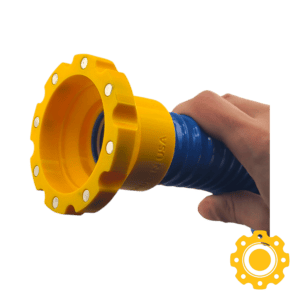
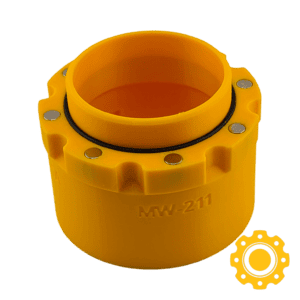
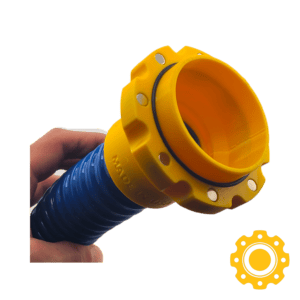
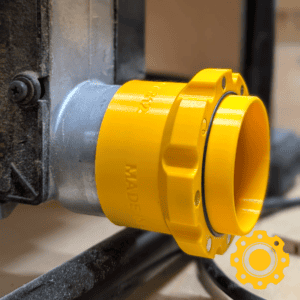
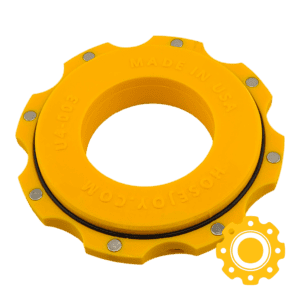
HoseJoy size-down adapters make this physically possible by letting you connect:
- 2.5″ dust collector flex hose
- to extractors with ~58 mm inlets
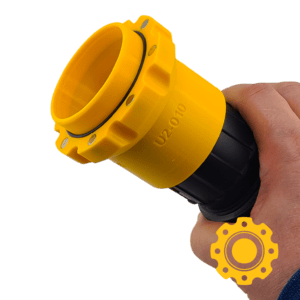
- and then step down to 38 mm or 32 mm near the tool
From a plumbing standpoint, this is clean, sealed, and mechanically sound.
From an airflow standpoint, it’s where expectations matter.
The Catch: Bigger Hose Lowers Velocity
At shop-vac airflow levels, a 2.5″ hose has much lower air velocity than a 32 mm hose.
What that means in practice:
- Fine dust will usually move
- Small debris often behaves
- Large chips may settle in long horizontal runs
- Capture at tool shrouds can feel weaker if you stay large too long
So while a Fein can move material through a 2.5″ hose, it can’t do it with the same authority a true dust collector can — especially over distance.
The port size allows debris in.
Velocity determines whether it keeps moving.
The “Sane” Way to Use a 2.5″ Hose on a Shop-Vac Extractor
If 2.5″ hose is your only viable option for a long run, the best configuration looks like this:
- 2.5″ hose for most of the distance (relaxed, gentle bends)
- Step down as late as possible
- Short 32 mm or 38 mm hose at the tool
This works because:
- The large hose reduces friction over distance
- The short small-diameter section restores velocity where capture matters
- The extractor stays in a usable part of its fan curve
This is exactly the scenario where HoseJoy size-down adapters shine: they let you transition cleanly, without leaks, clamps, or floppy rubber reducers.
When You Shouldn’t Use 2.5″ Hose
Even though you can connect it, you may not want to if:
- Your total hose length is already short
- Your tools rely on high capture velocity (sanders, track saws, routers)
- You expect “dust collector” performance from a shop-vac motor
- You’re moving mostly fine dust and don’t need chip capacity
In those cases, staying in 32–38 mm the whole way often performs better.
Bigger hose doesn’t create more airflow — it just wastes less of it. If there isn’t much distance to waste airflow on, there’s no upside.
The Real Takeaway
HoseJoy adapters don’t magically turn a Fein into a dust collector — and they’re not meant to.
What they do give you is control:
- control over hose diameter
- control over transitions
- control over where restriction lives in your system
Used thoughtfully, a 2.5″ trunk + short small-hose whip can be the best possible solution for a long run with a high-static-pressure extractor.
Used blindly, it can absolutely disappoint.
Related Products